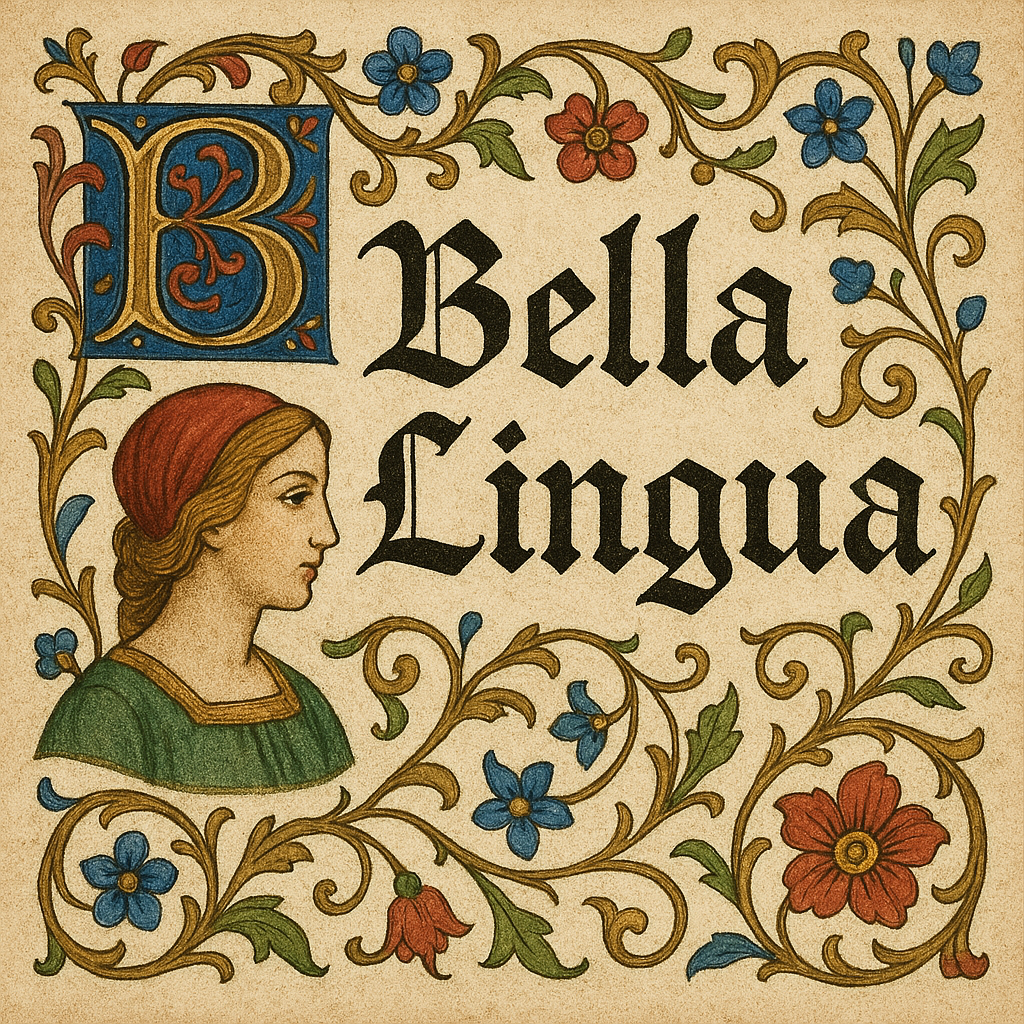
The neighboring countries of Blinkinboor and Bellalingua could not have been more different. Cursed with a rugged topology, Blinkinboor sat atop vast iron deposits, its citizens hard-scrabble, silent types whose brute force culture forged from the earth a veritable mining machine that cranked out money by the ton. Adjacent to Blinkinboor, but possessing no natural resources of her own, Bellalingua was blessed with a rich language that steeped its people in centuries of poetry and literature.
To compensate for no apparent beauty, Bellalinguans spent their days composing works of incomparable language, which they regularly traded with the Blinkinboors for hard currency. For their part, the Blinkinboors possessed not a literary bone in their collective body. But in the rare event they grew bored of exchanging monosyllabic grunts, or in the odd moment they felt drawn to a brush with higher orders of thought, the Blinkinboors happily forked over a week’s wages for an inspiring sentence or two from their layabout neighbors. To steady their pendulum between drudgery and enlightenment, the Blinkinboors covenanted with the Bellalinguans for a line of revolving credit against the unlikely but not unimagined possibility of sudden total ignorance. Beyond the benefits of a steady cultural exchange between the two counties, the loan agreement provided Bellalinguan artisans a reliable hedge against the ebb and flow of literary taste.
Time passed … Entropy rose … Fortunes reversed … A deal was pitched.
During one particularly bitter dry spell, Bellalingua’s proud Queen Isabella approached her industrial counterpart and first cousin twelve times removed, Count Abso Lootli Blinkinbooring III, to extend the repayment of the loan.
“To tide us over until our words are once again in fashion.”
But instead of agreeing to the new terms, on this occasion, Blinkinbooring III posed to Isabella an odd but tempting arrangement.
“Why don’t you do what I do? “
“Parade myself through the streets as some kind of ferrous oxide Godiva?”
“You’ve read the news; but my people can’t read a Stop sign,” he replied, unflapped and unaware whether a Godiva was a steel ball or an army tank. “Package up your country’s Bella Linqua—it’s beautiful language—and sell it, padlock, stockpile, and barrel spigot, to the people that use it everyday! Midas knows they’ve exploited your words fee-free for centuries! Happy to underwrite the entire IPO!”
“Easy for you to say, whose language is no more than a repugnancy of pig snorts, replied the queen. “Your ‘denizens,’ as you call them—how much would that word cost, I wonder? —they can barely mosh together two syllables. Having taxed your subjects into silence, how nice never to be questioned by them!”
“If only ‘Pig Snort’ had a word for lingua-snob!” he pressed. “Sell your native tongue to that leech mob of yours or give it to me and I’ll make you rich.”
“Not in a million millennia.”
But as the recession deepened the depletion of Isabella’s treasury, the broken queen turned to Blinkinbooring one final time, heavier hat in hand, with a humble proposition.
“So let me get this straight,” Blinkinbooring clarified after Isabella spelled out her conditions of sale. “I get the entire Bellalinquan language: its vocabulary, libraries, rare and first edition manuscripts, even its alphabet. In return, I agree to bail you out once and for all. Does that capture it?”
“It does. Except for the three letters.”
“Right. Three letters. Agreed!”
The deed was done, and more time passed. Years later, near life’s end and veritably speechless, Queen Isabella ventured out among her subjects one last time. They didn’t have much to say to her, of course. They grunted and groaned, nodding and frowning, not for the bargain she struck; that was too far in the past for a people with no language left to recall. It was too taxing, figuratively and literally, even to say “Good morning.” When one of the ubiquitous Blinkinboor auditors greeted Isabella in the street in her former tongue, she spotted the trap and replied not a word.
The following day, past rope’s end, Isabella commissioned a stone mason to prepare her tombstone. And then, without penning a note, she climbed to the top of the castle wall where she struggled to think of one last word to say. Unable even to muster a single thought, Isabella touched the stone pillar and leaned away from the castle.
Was that a ‘parapet’ she wondered as she loosened her grip. That’s surely the word. “Parapet!” she cried as she floated downward. Send me a bill.
If you ever find yourself within the expanded borders of the ancient country of Blinkinboor, be sure to stop by the Bellalinguan cemetery to pay your respects to the memory of Queen Isabella. Try not to judge her harshly as the monarch who sold her country’s last words to save her people from starvation. You’ll know her grave as the tallest among the hundreds of markers, though not from the same three letters carved upon them all.*
Years later, when the winds had softened and the silence seemed less harsh, a young stonemason—one whose family had long passed down tales of Bellalingua’s lost language—visited the queen’s grave. Curious about the famed ‘three letters’, he brushed away the years of dust and grime. What he found startled him. The letters were not a word at all, but three distinct marks: a curled flourish, a sharp diagonal, and a looping arc—a forgotten part of the Bellalinguan alphabet, one that no longer existed in modern Blinkinboor’s taxed vocabulary. The young man, a quiet dreamer, recognized them at once. They were the silent symbols used by Bellalinguan poets to signify a pause, a breath, a thought yet unfinished. With a grin, he pulled a chisel from his satchel and etched a fourth mark beside the others—just a small dot, a punctuation of hope.
The following spring, whispers returned to the streets of Blinkinboor—not in speech, but in scribbles scrawled on walls and fences. Then came phrases, sentences, entire stanzas, building like birdsong at dawn. And slowly, without fanfare, the silence began to break.
*After reading a working draft of this story, whose title, RIP: A Modern Parable, had been inadvertently deleted, my friend Israel Martinez, wondering about the reference to the “three letters,” sent back the final two paragraphs, which I have appended with his permission.
